Automation system for longwall mining

In modern mining, ensuring maximum safety, productivity, and durability is a daily challenge. This is where our automation systems come into play.
Not only are they rigorously tested, they are also compatible with numerous other components such as sensors, transmitters, and control units.


Longwall Automation System components
Shield components of the DRD Longwall Automation System
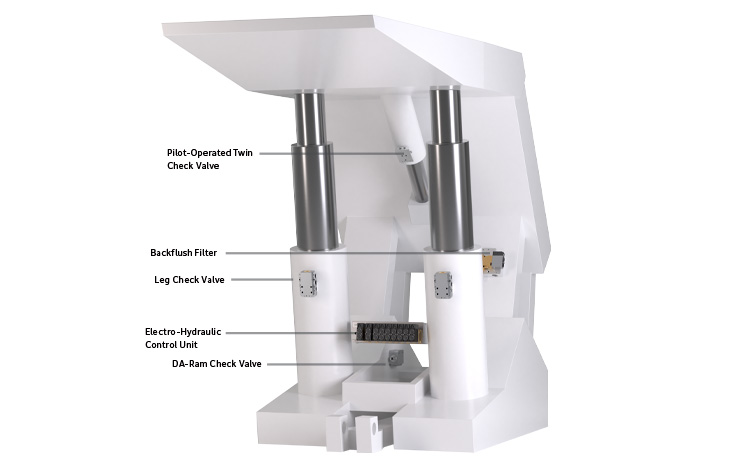
The shield automation system is based on the shield control unit. To reduce the number of cables and allow free positioning of the user interface, the system consists of a sensor strip for pressure sensors and displacement transducers, as well as a valve strip that can be placed next to the main hydraulic control. The system can be upgraded with tilt sensors for measuring the height of the shield.
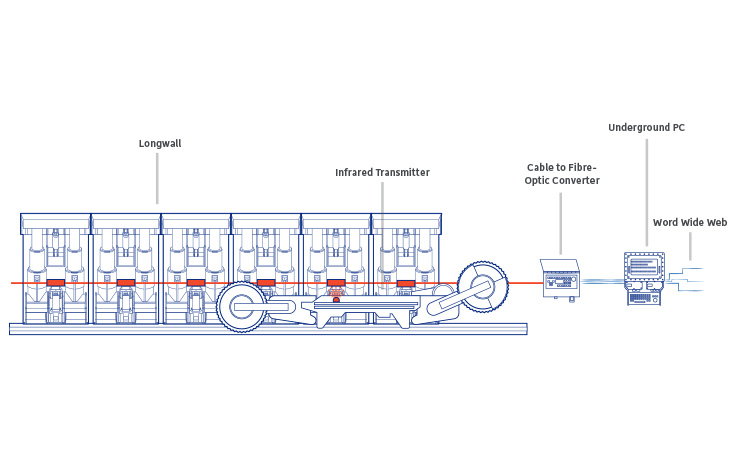
The DRD Longwall Automation System
Thanks to the modern components in the shield control unit, no separate longwall controller is required. The explosion-proof PC shown is only needed to facilitate configuration and also enables monitoring of the longwall during operation.
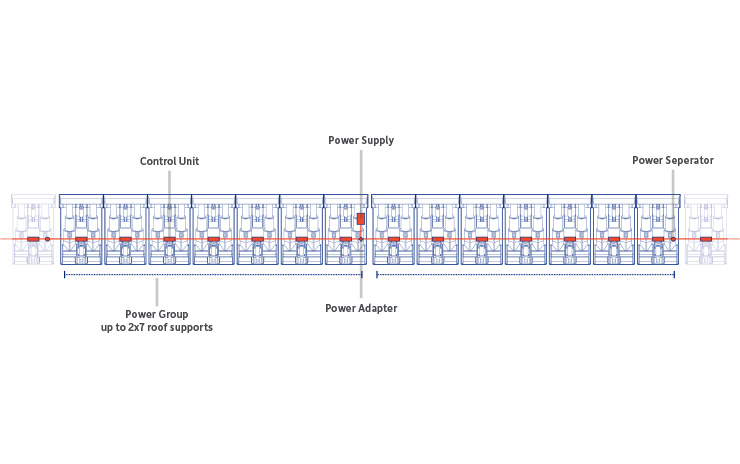
Power Supply System
The power supply has also been developed using modern components to enable high currents with intrinsically safe design. It is designed as a dual system and can supply up to 2 x 7 shield extension units. Suitable power adapters and separators are available to isolate the circuits.
Components in detail

The EC-Angle uses a 3-axis linear accelerometer and a 3-axis gyroscope. Therefore it is possible to measure on the one hand dynamic acceleration due to motion or vibration and on the other hand static acceleration due to gravity. The communication between the control unit and the sensor or between several sensors is done by CAN-FD-interfaces.

Via a CAN-FD-bus the control unit is able to read up to 6 sensor values by using 16-bit high resolution ADCs.Sensors can have the standard output range from 0.5 to 4.5V DC or current outputs like according to the Namur standard. It is possible to install up to three EC-Sensor in line or in combination with other CAN FD units from the DRD EC-family. The board of the EC-Sensor is equipped with a high precision acceleration sensor.
This sensor in combination with other sensors can be used to calculate the hight of the shields or to detect any kind of motions.

Via a CAN-FD-bus the control unit is able to activate up to 24 different loads. The current of each port is measured in real time and each port is short-circuit proof. LEDs indicate, which ports are activated. It is possible to install up to three EC-Valves in line.

All actors and sensors of a roof support are connected via CAN- or RS485- interfaces to the EC-1-Control. All control units of face are connected to an ethernet network. The unit can be operated by an integrated keyboard or remotely by a radio remote control or via the ethernet network. The emergency circuitry is designed acc. to SIL2. A LED light bar helps the operator to identify, which shield(s) will be controlled by his keypresses.
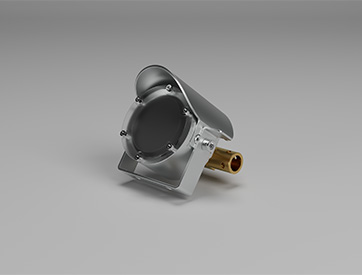
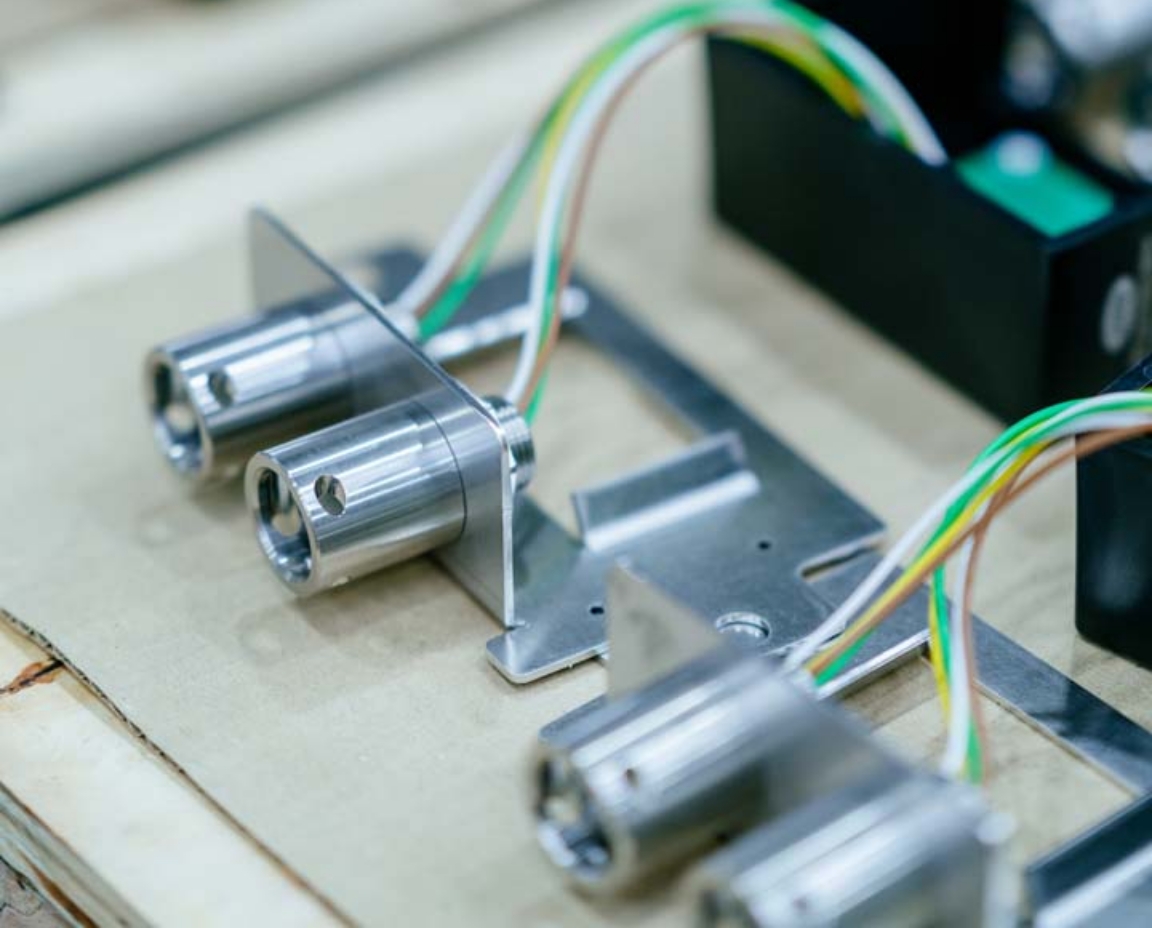
This unit sends out pulsed infrared light as soon as it is powered on. A viewing angle of ± 60° ensures that the shearer can be detected by the EC-1-Controls even under suboptimal conditions. Several LEDs are used for diagnostic functions to make service easy for the miner.
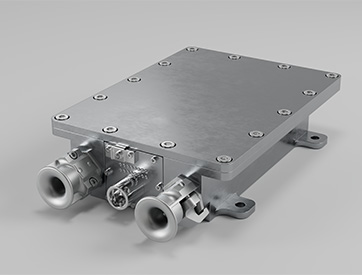
The EC-Power is designed according to the standards DIN EN 60079 and to ensure the intrinsically safety we used newest technology. Beside the well-known voltage- and current limitations there is used additionally a circuitry which shuts down the output in case of an overload and starts up the power supply after a defined period of time. LEDs show the status of each power supply.

The station light can be connected to a CAN-FD-line of the shield control unit. Beside the functionality of illumination, it is used as anchor of the DRD personnel detection system. Furthermore, there is the option to use a variant with Zigbee communication to communicate with wireless sensors. Finally, it uses one of the EC-Angle sensors to detect movements and the inclination of the unit.
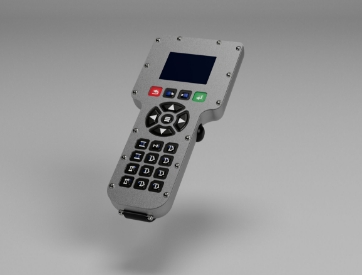
The radio remote handheld can be used to control the roof supports. The communication is done by Bluetooth low energy. Several additional functions make the EC-Remote to a key tool of the DRD EC-family:
Bluetooth low energy. Beside the standard functions of a remote control, the unit can be used to calibrate the inclination sensors. With this the shield height can be calculated with high accuracy. With the large memory implemented to the radio handheld it is possible to update firmware and software of all used components used in the EC-family. Last but not least an integrated UWB-module detects the exact position of the handheld and the user in the face.
Additional components for system expansion
- Displacement sensor (Reed Rod): A versatile sensor solution ideal for various detection applications.
- Power Separator: Efficiently manages power distribution within your system.
- Power Adapter: A reliable adapter for seamless power integration.
- Inclinometer (wireless version): Offers precise tilt measurement with wireless connectivity.
- Personnel Detection System: Compact chip for attaching to a belt, part of the Station Light's personal identification system.
- Pressure Sensor: Used in hazardous areas to measure and transmit pressure values up to 1.000 bar.